Project Information
Date: 2018 - 2024
Client: Creative Development/GAFFA Gallery
Location: City of Sydney (Gadigal-Eora)
Supercontext Team: Andrew Daly, Colette Hortle, Ellie Skinner, Eduard Fernandez, Rob Meyerson, Alex Jones
Consultant Team: Weir Phillips Heritage, Cantilever Studio, Centric Engineers, BCA Logic/Jensen Hughes, SGA Fire
Built by: SHEETH Projects
Photography: Hamish McIntosh
281 Clarence St is a state-heritage listed former police station building, designed by then colonial architect James Barnet in the late 1800s. Originally 1 storey, it was subsequently added to by Barnet, and then further again by then government architect Richard Wells in the 1920s. It served as a police station until the mid-1980s when it was sold and converted into a private residence and offices. Since the mid 2000s, 281 Clarence has been the home of the Gaffa Creative Precinct, including maker spaces and an art gallery.
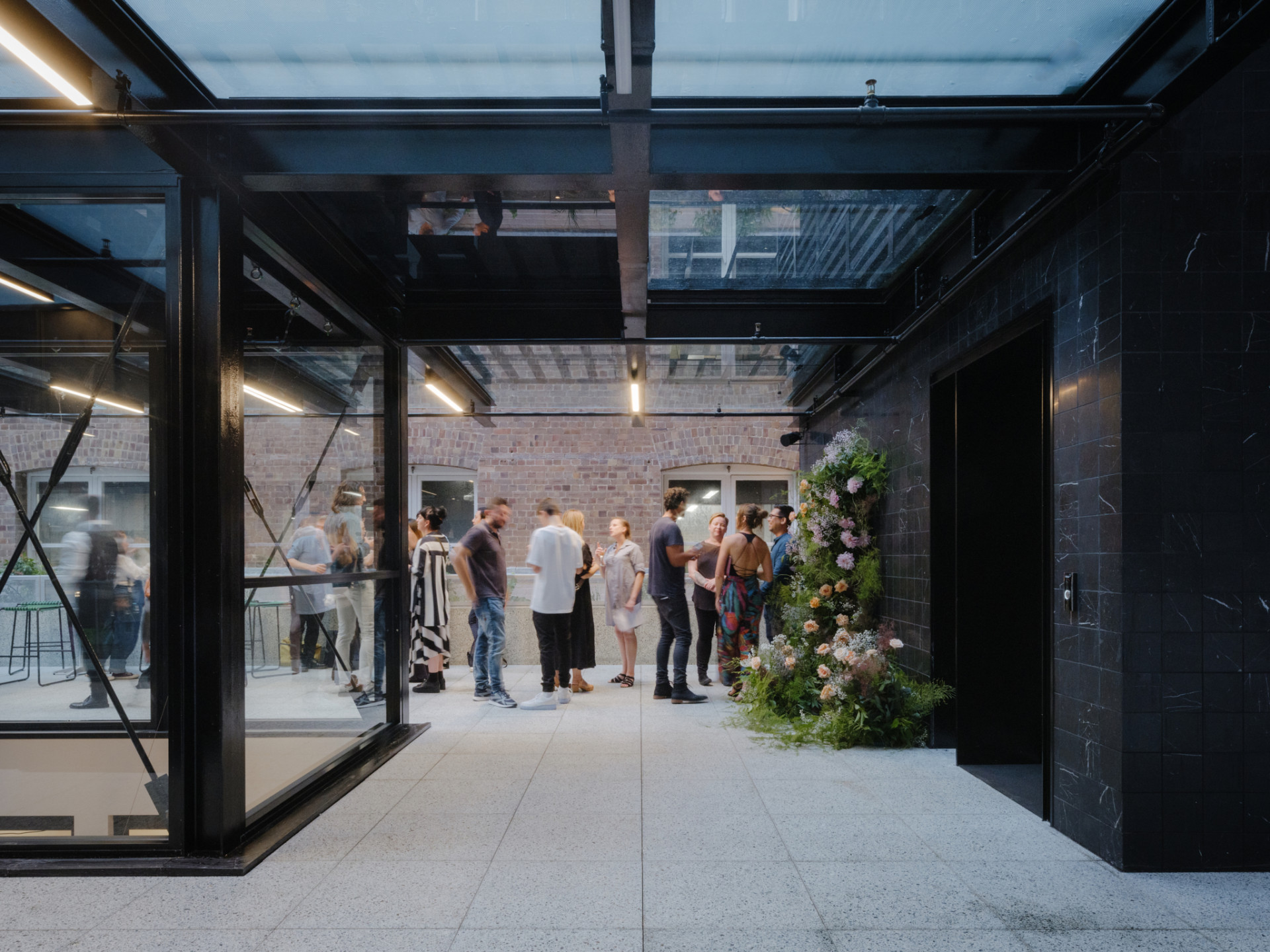
In 2018 Supercontext were engaged to undertake the complete refurbishment of the building which, after 30 years, was in need of upgrade to meet contemporary standards. The project developed further to incorporate a new outdoor roof garden, to be used as an extension of the art gallery as an outdoor garden and exhibition space.
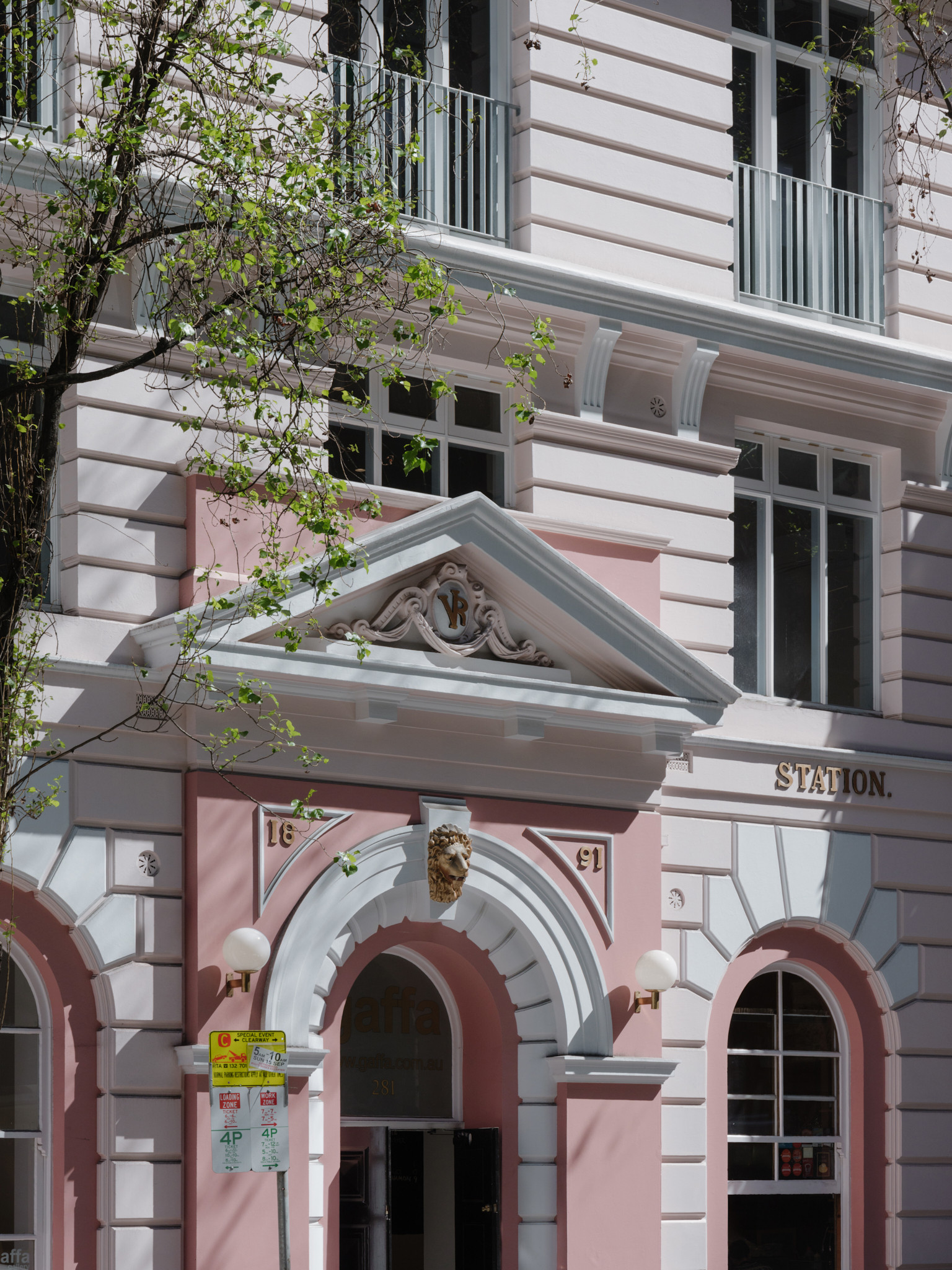
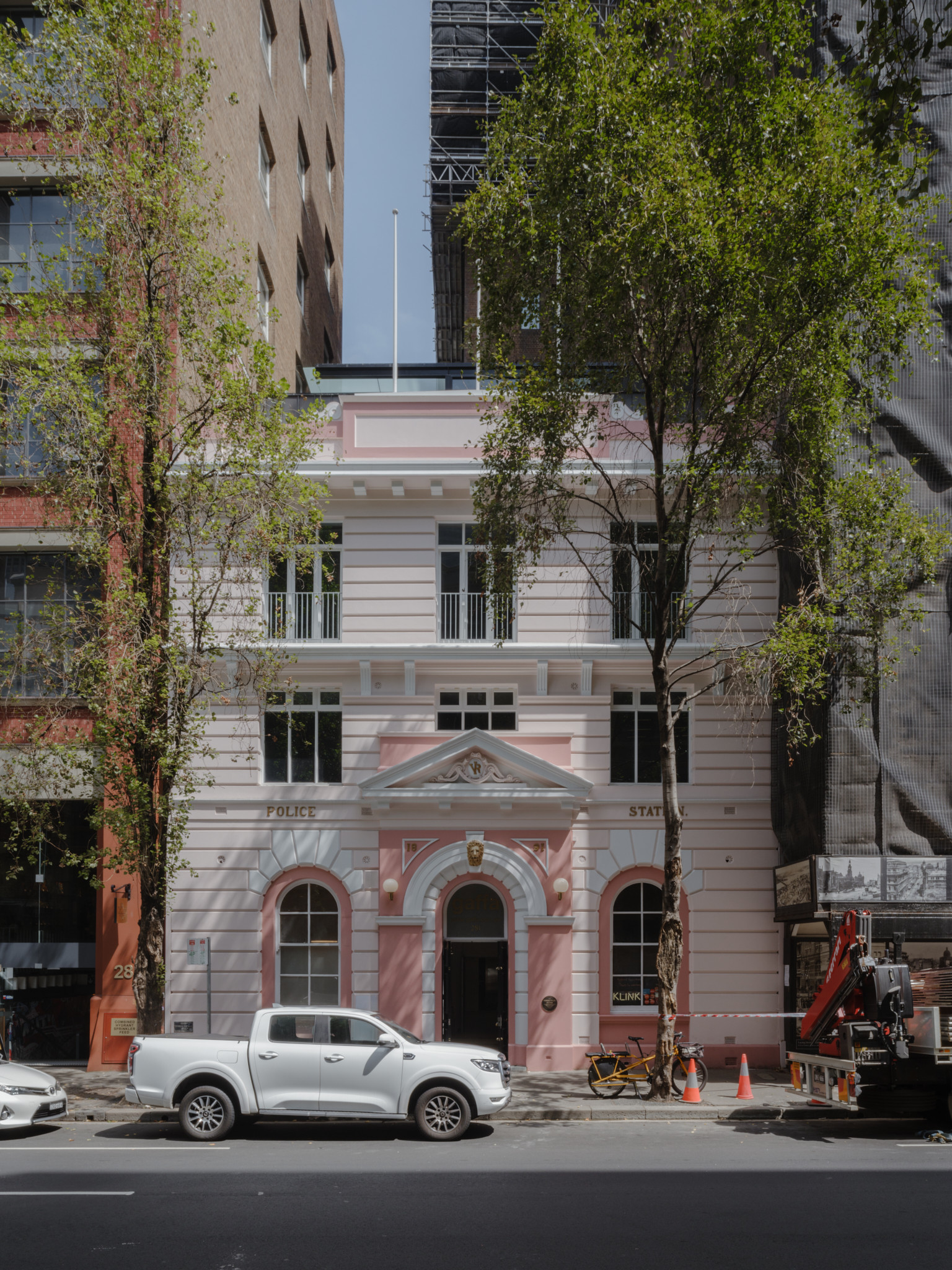
(below: view from Druitt St, Hamish McIntosh). Nestled amongst office and commercial buildings at the southern end of Clarence St, the building is substantially lower than its neighbours. The works involved facade restoration and repainting, a key concern of which was the desire to make people notice this little but significant piece of Sydney's history. Prior to the renovations, painted an orange/ochre colour, the building had garnered the informal nickname of "the Pink Police Station" - a moniker we felt worthy and a playful way to highlight this piece of the city.
(right: Clarence St elevation, Hamish McIntosh). The new additions to the building sit largely invisibly above the parapet, set back from the main elevation and in dark colours receding from the streetscape. The key works to the heritage facade included new timber window joinery at the upper levels, new steel balustrades and general facade render restoration works.